Creating a successful product isn’t just about writing requirements or designing beautiful screens. A product manager is the person who translates user needs into real solutions, balances business priorities with technical constraints, and finds meaning where, at first glance, there is only chaos, uncertainty, and a flood of ideas.
But how does this way of thinking develop? And what separates an intuitive approach from a professional one?
To answer these questions, we spoke with
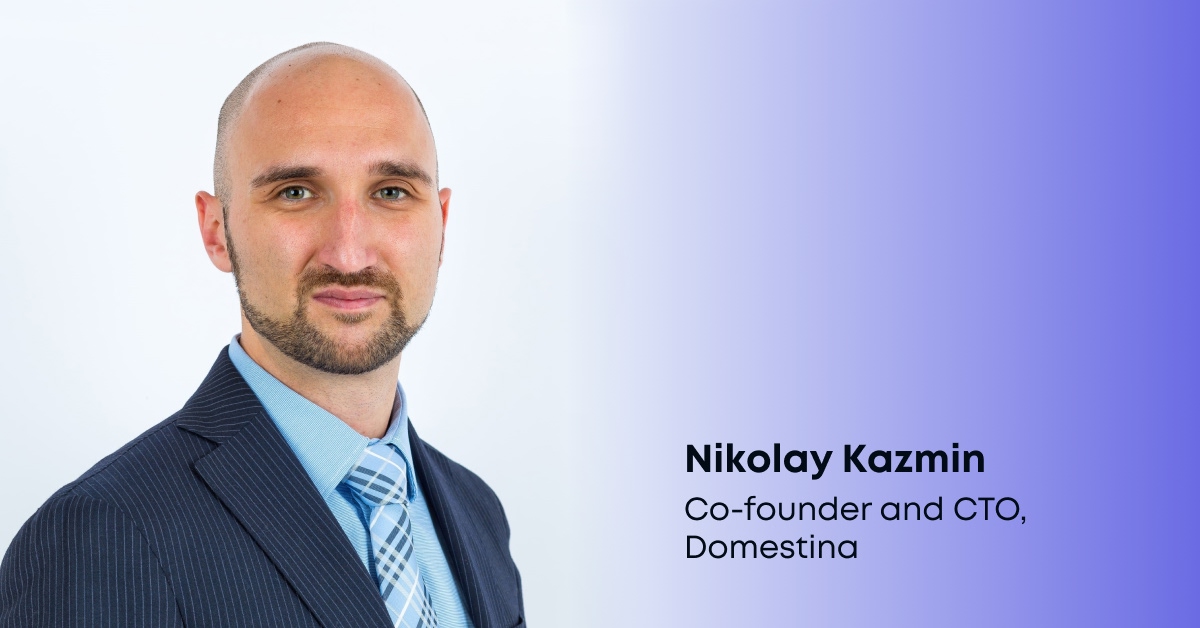
Niki Kazmin – founder and CTO of Domestina, with over 15 years of experience building products from scratch. As a lead trainer in the Upskill Product Management program, he has a front-row seat to watch how people take their first steps into the world of product management, and to witness that characteristic “aha” moment, when everything suddenly clicks into place.
Tell us a bit about yourself.
My name is Nikolay Kazmin. I’m the founder and CTO of Domestina and a lead trainer in the Upskill Product Management program at Telerik Academy. I started my career as a software engineer, and since 2010 I’ve been working in startups, building products from the ground up.
What drew you to product management? After more than 15 years in software development, why shift your focus to building and managing products?
Over time, I realized that I love technology not for its own sake, but as a tool to solve real problems. What drives me most is creating products that people find genuinely useful and enjoy using. After several unsuccessful projects, I dug into what makes a product successful and discovered an incredibly complex and fascinating discipline. Gradually, I moved from a purely technical role into product management.
Which trends do you think will shape the future of product management?
Unsurprisingly, artificial intelligence. It’s transforming everything in three key ways:
- AI as a tool for creating products that were impossible until recently.
- AI as a productivity booster for product managers, helping them work smarter and more efficiently.
- AI as a developer’s assistant - the most impactful change. Software engineers aren’t going away, but their productivity will skyrocket. One engineer can now accomplish far more in the same amount of time, allowing companies to bring more ideas to life. And more realized ideas mean more work—and opportunity—for product managers.
What are the most common misconceptions about the role of a product manager?
That a PM has to do everything themselves. In reality, the best PMs work closely with at least one engineer and a product designer. Each role brings unique expertise, and together they shape and build the product.
What skills and mindsets define a successful product manager?
The most important quality is a genuine desire to help users - true empathy for their needs and challenges. Next comes collaboration: successful products are the result of multiple roles working together, and a good PM must navigate the priorities of diverse stakeholders. Finally, intelligence and a relentless curiosity are essential. The field evolves rapidly - new tools, better practices, innovative business models. A PM must stay ahead of the curve, or risk becoming irrelevant.
What advice would you give to people with no prior product experience who want to switch careers?
No one is born a product manager. If you’re motivated and willing to invest the time and effort, you can learn the skills. But it’s important to understand that much of the product creation process falls squarely on the PM’s shoulders. It requires a wide range of knowledge, disciplined practice, and persistence. The work is demanding, but every moment is worth it.
What do participants gain most from a product management program? Are there moments that surprise them or change the way they think?
The most distinctive feature is the program’s practicality. Almost everything in the
Upskill Product Management program at Telerik Academy, concepts, frameworks, tools- comes directly from real-world experience. Participants apply what they learn to their own projects immediately, quickly seeing what works and what doesn’t.
The classic “aha” moment usually comes when they grasp the enormous difference between intuitive problem-solving and a structured, professional approach. In the very first lecture, we show how most people talk to customers without preparation, versus how to conduct these conversations to extract genuinely useful insights. That difference is often eye-opening.
Ready to turn ideas into real products?
👉 Join the
Upskill Product Management program and experience your own "aha" moment.
Find out more.